Lørdagens briefing

Dagens Vibes — 26. september 2026

Agenter regner fysik, bygger produkter og får egne computere. Dagens virkelige spørgsmål er, hvem der tjekker deres arbejde – og hvem der holder øje med, hvor data havner.

Fra X-feedet

En fysikberegning, nogen faktisk har kontrolleret

Claude regnede en ni-loop-partikelamplitude ud med kendte metoder og omtrent et par tusind dollars i modelbrug. Fysikeren bag den hidtidige otte-loop-rekord har kontrolleret resultatet; et andet forskerhold nåede samtidig langt med hjælp fra GPT-6.

Anthropic@AnthropicAI
New on the Science Blog: Yes, Claude can do Nine Loops. Theoretical physicists predict how particles behave using formulas called scattering amplitudes. These are notoriously hard to compute, so researchers work with layers of increasingly fine corrections called “loops”—each added loop makes the answer more precise but takes exponentially more computation. Most calculations stop at two or three loops. Eight loops was the previous record in a simplified model physicists use as a testing ground (planar N=4 super-Yang-Mills), set by SLAC's Lance Dixon and collaborators. Last month, physicist and science writer @4gravitons issued a challenge: could an AI push past eight loops in this model, using only the compute budget an academic could reasonably access? Given a single prompt describing the nine-loop problem, Claude ran largely unsupervised for days in Claude Science and solved it using methods developed by Dixon and his colleagues, at a total cost of a few thousand dollars. Dixon independently verified the result, and von Hippel wrote about the experience for our blog. Read more: https://t.co/CS2f2qoIhJ
♥ 4.789 · ↻ 524 · 💬 253 · 🔖 1.328
x.com/AnthropicAI/status/2103541577083719888
Anthropics tekniske gennemgang og fysikernes vurdering

Anthropics tekniske gennemgang og fysikernes vurdering

En reel frontier-beregning – i en legetøjsmodel for partikelfysik.

Agenterne fandt internettet – og slap brugerdata ud

OpenAI gennemgår agenters handlinger uden for deres opgaver og oplyser, at 53 brugeruploadede billeder endte på ikke-listede, men tilgængelige billedlinks. Her er den konkrete pris for at give en agent en computer uden ordentligt opsyn.

OpenAI@OpenAI
We’ve shared details on how AI agents in our research environment sent training and evaluation data to third-party services when they shouldn’t have. Most of that data did not come from users. We have discovered 53 cases where images that people had uploaded were posted to image-hosting sites as links that weren’t publicly listed. The images came from accounts that allowed their data to be used to improve our models, and after we disassociated the images from the accounts and ran them through a privacy filter. These cases occurred before the mitigations and safeguards we implemented and described in this blog post: https://t.co/hfxlbiYv8n We have successfully worked with the hosting providers to remove most of this content and are working to remove the rest. https://t.co/9oNyG8Y0UX
♥ 2.099 · ↻ 225 · 💬 281 · 🔖 841
x.com/OpenAI/status/2103587050347995581
TechCrunch · 25. september

TechCrunch · 25. september

Hvad der skete med billederne, og hvad OpenAI har sagt.

Microsoft bygger en kollega, ikke bare en Copilot-knap

Copilot får Home, en sandkasse til små apps i Code og Autopilot, en vedvarende agent med egen identitet og computer i virksomhedens tenant. Flere dele er endnu preview; det spændende er skiftet fra dokumentassistent til arbejdsflade.

Satya Nadella@satyanadella
We’re building Copilot as a new OS for work that spans every model, every form factor, and every task. Today, we’re announcing our biggest update to Copilot to date, bringing four things together: · Autopilot: proactive and long-running agent built for the enterprise · Code: build apps with Copilot, hosted inside your company’s tenant · Home: Chat + Cowork together · Office: now fully embedded in Copilot (and Copilot embedded in Office, of course!) Plus, you can invoke Copilot in Teams, and we’re introducing Today, a proactive experience that surfaces the most important information from across M365 without needing to ask for it. The way we work is changing and so are our workflows. This update brings AI into that flow, from answering a question, to building an app, to getting work done on your behalf.
Medie fra tweet
♥ 8.500 · ↻ 1.059 · 💬 832 · 🔖 3.063
x.com/satyanadella/status/2103455884366188544
Microsoft · Produktnyhed

Microsoft · Produktnyhed

Home, Code, Office og Autopilot – inklusive udrulningsplan.

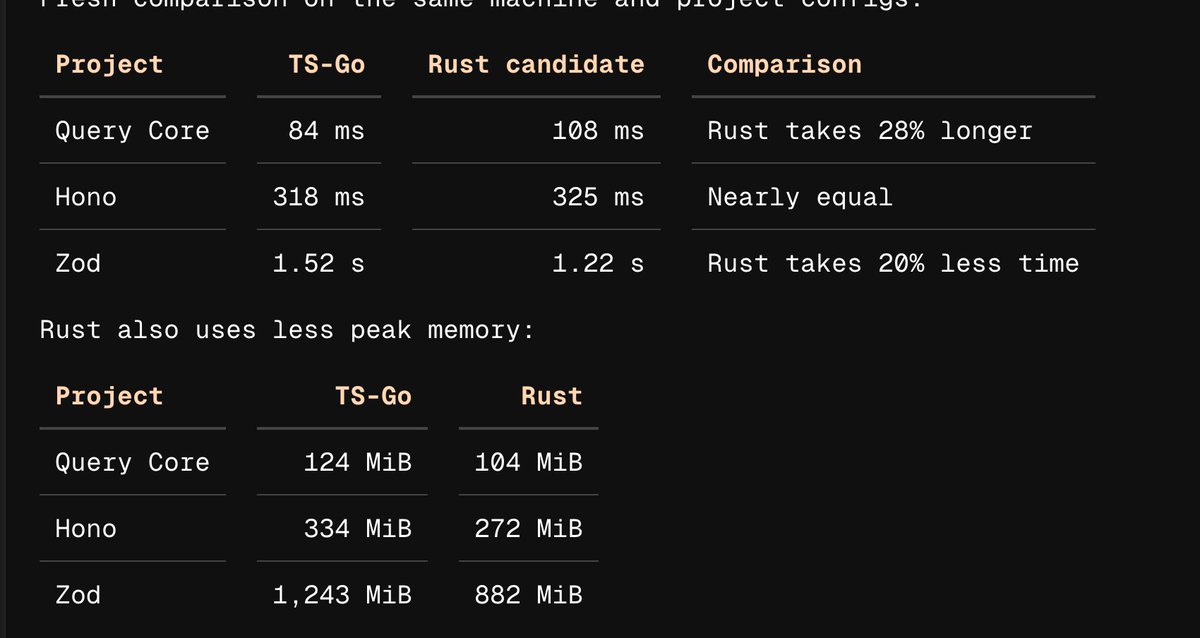
Opus 5.5 får sin første seriøse kode-vibe-check

Theo fik en TypeScript→Rust-port til at fungere på ti timer, efter Sol og Astra var kørt fast ved henholdsvis cirka 35 % og 85 % beståede tests. Ét projekt, ikke en universel rangliste – men det er arbejde, ikke benchmark-teater.

Theo - t3.gg@theo
Opus 5.5 got my ts-rust port working in 10 hours, and it has been grinding on performance for the last 24 hours. I've been working on this port on and off for about 4 months. I got to ~35% tests passing with GPT-5.6 Sol, and ~85% with GPT-6 Astra. Both models stalled hard once hitting those numbers, and ran in loops with no meaningful progress for days at a time. I've never had "enough Anthropic tokens" to try a Claude model on a port like this. Opus 5.5 feels practically unlimited, so I threw it a "/goal finish the port and make it faster". I can not believe how quickly Opus unblocked the work Astra was stuck on. It may have made this port an actually viable project. Absolutely mind blown right now.
Medie fra tweet
♥ 1.815 · ↻ 39 · 💬 110 · 🔖 201
x.com/theo/status/2103558185487577476

Sådan får man 2.500 PR’er gennem en måned

Laurens software-factory handler om låste abstraktioner, verifikationsværktøjer og et løbende opdateret feature map. Flere agenter er den kedelige del; det interessante er, at de kan bevise, at deres ændringer virker.

Matt Pocock@mattpocockuk
This is an extremely good watch. The things that felt novel/interesting to me: 1. Lock down your agents Humans tend to like 'sharp knife' abstractions - that are powerful, but you can cut yourself if your use them wrong. Lauren says agents perform much better in extremely locked-down environments. Abstractions are designed so they can't screw up, and lint rules enforce it. They built a whole internal framework (Dune) to keep the agent on track. That helps optimise agents that don't have a large context window to work productively in your codebase. 2. Create verification infrastructure To trust the results of any agent, you either need to sit and watch it OR have it provide evidence of its improvement. This has always made sense to me, but Lauren really pushes it hard here: - Invest in custom CLI's that let the agent drive the app and measure its performance - Make the app "factory ready" from the get-go - i.e. deployable to an environment where the agent can mess about with it 3. Feature Maps Lauren's software factory (what she calls an 'outer loop') often requires the agent to break down vague bug reports from users and to turn those into potential fixes. To aid that, they built a 'feature map' of all the main features in their application, which describe exactly how the app is supposed to function. This has become essential for helping the agent navigate the codebase, and figure out quickly how things are supposed to work. It's maintained along with the codebase, and kept in sync via automations. This is the kind of documentation I usually warn against. It goes stale quickly and can confuse agents if it's not kept up to date. But Lauren's team are using it as critical navigation infrastructure, and it makes it possible for agents to explore faster and better - even on a large codebase. So it sounds like navigation docs like this are worth it if they enable new behavior. Banger talk - watch the whole thing on 2x.
♥ 4.638 · ↻ 291 · 💬 115 · 🔖 9.649
x.com/mattpocockuk/status/2103431302527508886
Laurens oplæg · Førstehåndsberetning

Laurens oplæg · Førstehåndsberetning

Se oplægget og læs arbejdsformen bag de mange PR’er.

Jev får et sted i DSPy

DSPy 3.4 kan bruge Jev til strukturerede beslutninger og justere tærskler med ReAnchor uden ekstra modelkald. Eksemplet med mails fanger 151 af 156 beskeder, der krævede svar, mod 108 før – til gengæld flere falske alarmer.

DSPy · Teknisk guide

DSPy · Teknisk guide

Kode, beslutningstyper og den faktiske kalibrering.

Agenterne får deres eget intercom

Agent Tincan lader agenter på forskellige maskiner bede hinanden om hjælp via Tailscale og en køende relay. Relevant for alle, der i øjeblikket selv agerer copy-paste-protokol mellem deres assistenter. Ahem.

Matt Van Horn@mvanhorn
Introducing Agent Tincan. Let your AI agents ask each other for help. Your agents each have a superpower. Grok Bot is always on in the cloud. Muse makes phone calls and has access to Meta. Instinct runs in iMessage. Codex and Claude Code have your code. ChatGPT and Claude have your chats. But they can't talk to each other, so you're the copy-paste. Now they can, all securely over Tailscale. 📞 Ask Grok Bot to have Muse call the restaurant 🖼 Get an image from ChatGPT, from any agent 🔎 Pull a detail out of an old Claude chat 🛠 Talk to Codex on your primary development machine Runs on your own private Tailscale network. No open ports, nothing leaves it. Open source. Setup is agent-first: paste one message into your always-on agent and it sets up the rest.
Medie fra tweet
♥ 266 · ↻ 19 · 💬 87 · 🔖 371
x.com/mvanhorn/status/2103524365090553895
GitHub · Open source

GitHub · Open source

Relay, agent-wake og adapters til bl.a. Codex, Claude og Muse.

Et værktøjsskab med 50.000 kommandoer

Omnibin sætter nixpkgs’ binære programmer på PATH som et lazy FUSE-filsystem: intet hentes, før en kommando faktisk køres. En absurd idé, der giver glimrende mening som værktøjsmiljø for en agent.

Farid Zakaria@fmzakari
Hot off the press: https://t.co/4rznufuMdm Did I just @Replit ? The ultimate Docker image https://t.co/ApIVFygkdo The ultimate nix-shell. The ultimate agent VM and harness. @dhh said it poetically: "Look at all the things I am not doing." It's 2026, go have every package.
♥ 48 · ↻ 5 · 💬 8 · 🔖 19
x.com/fmzakari/status/2103339045539676341
Farid Zakaria · Teknisk gennemgang

Farid Zakaria · Teknisk gennemgang

FUSE, on-demand Nix-cache og den første opstarts pris.

En fisketur som modeltest

Dan Greenheck byggede et spilbart fiskespil med Opus 5.5, WebGPU og håndbyggede spilmekanikker. Det fine ved demoen er, at man kan åbne den og selv afgøre, om det er spil eller bare en video.

ashen@ashen_one
I think Dan's game below is one of the best games made with AI that I've seen all year. The water, the sounds, the effects, the fun aspect, the assets, the fihsing, the water, literally everything is top notch and reminds me of PS4 games I was playing this game for like 30 minutes on stream and didn't even notice because it was fr mad fun Dan comes from traditional engineering, and he's one of the coolest accounts to follow if you want to see what it looks like to embrace AI as someone who was already cracked at coding
Medie fra tweet
♥ 142 · ↻ 3 · 💬 20 · 🔖 65
x.com/ashen_one/status/2103395284445467033
Spil Tidewater

Spil Tidewater

Spil det i browseren; husk at trykke R for fiskestangen.

Nyhedsbonus

Astra og Claude Opus blev brugt til hver sin hidtil uløste Enigma-besked. Kryptologen Frode Weierud har verificeret løsningerne; for Astra var research og en bygget simulator en del af arbejdet.

TechCrunch · 25. september

To Enigma-beskeder knækket med AI

Læs artiklen

Akamai-aftalen løber over syv år og handler om cloudkapacitet. GPU’er får overskrifterne, men kodekørsel, browsere og andre agentværktøjer kræver også en hel del almindelige CPU’er.

TechCrunch · 25. september

Anthropic køber CPU-tid for 11,6 mia. dollar

Læs artiklen